


Diamondback Hatch Fork Details: Travel, Preload and Cockpit Labels
Diamondback Hatch fork details describe a 100 mm SR Suntour XCM-DS with a preload adjuster in the saved Hatch 3 specification. The same page lists several cockpit measurements. Keeping those numbers attached to their components makes the sheet useful without turning it into permission for a fork replacement.
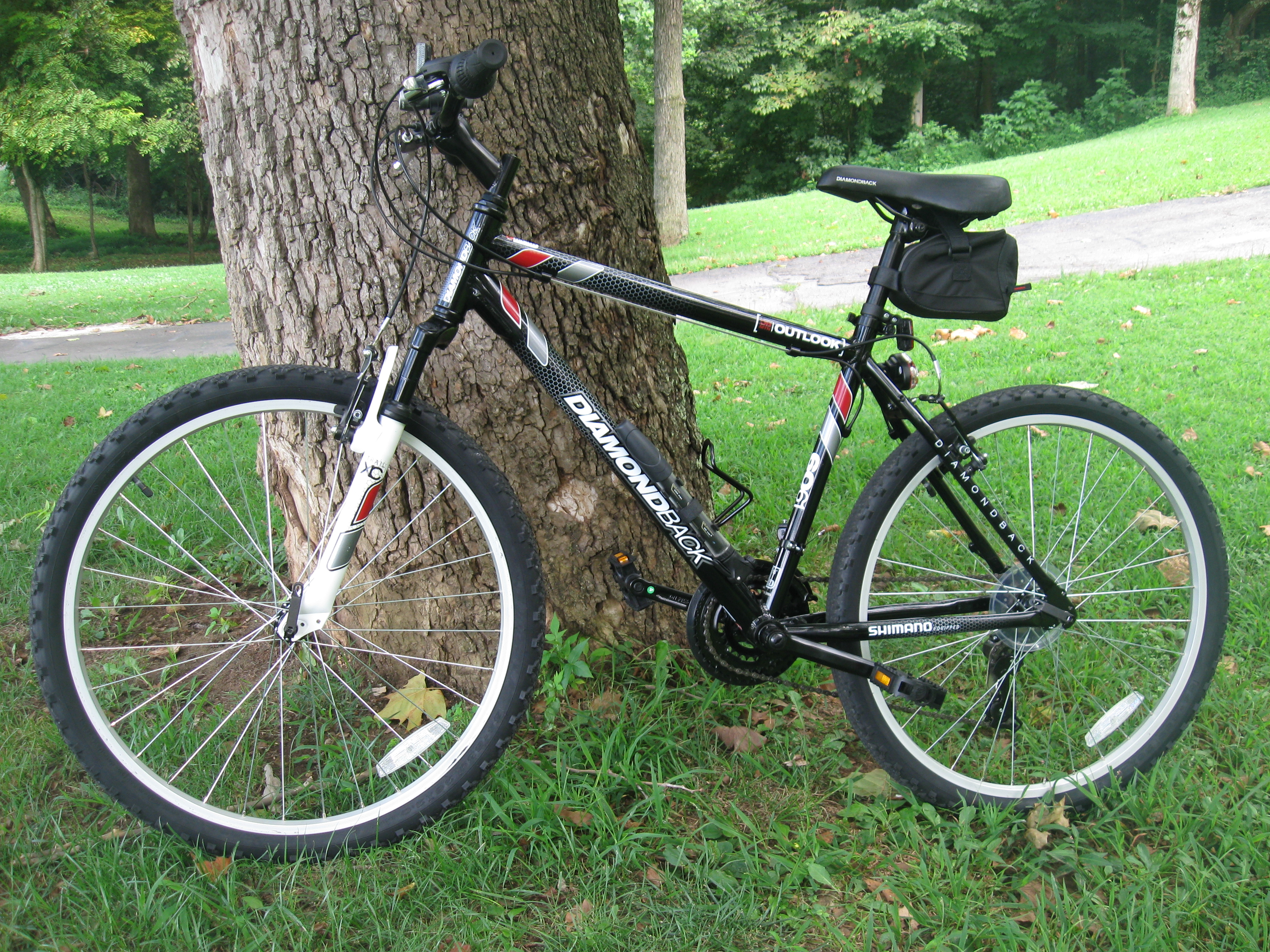
Diamondback Hatch fork details: keep travel with the fork
The XCM-DS name, travel and adjuster appear together. They identify the published fork arrangement; they do not supply an individualized preload setting. A rider's weight or the appearance of the fork in a distant photograph cannot fill that gap.
The fork row also uses the wording “IS Post Mount Disc.” Preserve it as the manufacturer's field wording. It is not sufficient evidence here to resolve the precise mount standard, adapter or rotor arrangement on an actual bicycle.
Three cockpit entries, three different descriptions
The headset is described as one-and-one-eighth-inch, semi-integrated, with cartridge bearings. That designation belongs to the headset entry. It should not be mistaken for the handlebar's clamp diameter simply because both appear near the front of the bicycle.
The aluminum MTB stem has a 31.8 mm bar bore. The aluminum handlebar also carries a 31.8 mm designation and has 25 mm rise. The shared bore figure describes a different feature from rise; copying “25 mm” into a clamp-size enquiry would discard the field's meaning.
Build an identification note before discussing changes
The local Diamondback Hatch 3 Bike supplies the model reference. A useful note groups the fork name and travel on one line, the headset wording on another, and the bar and stem entries together. Record any parts already replaced on the bicycle separately.
That note helps a shop understand an enquiry, but it is not a complete fit drawing. The saved table does not settle every required dimension or interface for an alternative fork. Matching one visible measurement cannot establish a complete installation or the limits of the frame.
There is also a difference between asking what a component is and asking how to adjust it. This guide answers the identification question. An adjustment requires the applicable instructions for the unit actually installed, rather than a setting invented from its travel figure.
Read this as a saved published specification, subject to change, with no model year inferred. The Diamondback index and brand overview provide context; the historical Outlook image cannot verify the current Hatch fork assembly.
FAQ
What travel does the XCM-DS entry give?
It lists 100 mm, together with a preload adjuster.
Is handlebar rise the same as bar bore?
No. The saved bar has 25 mm rise and a separate 31.8 mm clamp designation.
Does the headset entry approve a fork swap?
No. It is one identification field, not a complete compatibility assessment of a replacement fork.
Sources
Manufacturer source: Hatch fork, headset, stem and handlebar identification fields (https://www.diamondback.com/products/hatch-3).
Photograph credits and permissions
Photograph 1
Original title: Diamondback Outlook 2011.JPG
Creator: Cecraig77; creator URI supplied by the source: https://commons.wikimedia.org/wiki/User:Cecraig77
Original source URI: https://commons.wikimedia.org/wiki/File:Diamondback_Outlook_2011.JPG
License / permission: CC BY 3.0
License / permission URI: https://creativecommons.org/licenses/by/3.0/
Modification notice: Source-hosted JPEG retained unchanged, including original EXIF; no crop, recompression or color edits by this preparer. EXIF gives 7 August 2011, 02:23:03. No XMP packet or ICC profile was found. Earlier editing operations are unassessed.
Source disclaimer: Historical photograph identified by its source as Diamondback Outlook (2011 model), not a current Hatch 3 or its components. The source Date field contains the supplied text Charles E. Craig, Jr.; it is not treated as a date or verified identity expansion. Manufacturing year and mechanical condition are unverified. No endorsement or warranties are implied; other rights may apply.