


BESV PSA1 Brake Problems: Warning Signs and Service Boundaries
BESV PSA1 brake problems should be treated as stopping problems before they become maintenance projects. Weak braking, unexpected lever travel or a rough metallic noise deserves attention before another journey. A successful motor startup tells you nothing about whether the bicycle can stop correctly.
Identify the system behind BESV PSA1 brake problems
The official legacy PSA1 manual describes mechanical disc brakes, while the global specification table names Tektro MD-M311. Confirm the equipment actually fitted to your bicycle. Do not follow a hydraulic-bleeding tutorial simply because another BESV model has hydraulic brakes.
The old handbook also contains piston-related language in some removal sections despite describing a mechanical system. That ambiguity is a reason to use the correct component instructions and a qualified mechanic, not to invent a universal pad-removal method. This guide covers observations and service decisions rather than caliper disassembly.
Report changes in stopping and lever feel
Printed page 38 calls for a brake check before riding and says the levers should retain clearance from the handlebar. If the lever reaches the grip, moves differently from usual or the bicycle stops poorly, postpone the trip. Do not compensate by relying on the other brake for normal travel.
The troubleshooting section on page 50 distinguishes contamination, uneven clearances, cable problems and worn parts as possible issues. Similar sounds can have different causes. Tell the mechanic which wheel seems affected, whether the symptom appeared after washing or transport, and whether braking performance changed along with the noise.
Allow for wet conditions and service limits
Page 43 explains that wet surfaces and wet braking components can extend stopping distances. Reduce speed and allow more space rather than expecting dry-road performance. The manual also warns about heat after sustained braking. Stop when overheating or loss of performance is suspected and arrange inspection before continuing.
Keep oil and grease away from friction surfaces. A visual check cannot establish the remaining life of every pad or rotor, and this article does not prescribe a wear threshold for replacement parts. Have the fitted system assessed, with the correct manufacturer documentation, rather than guessing from appearance or an internet measurement.
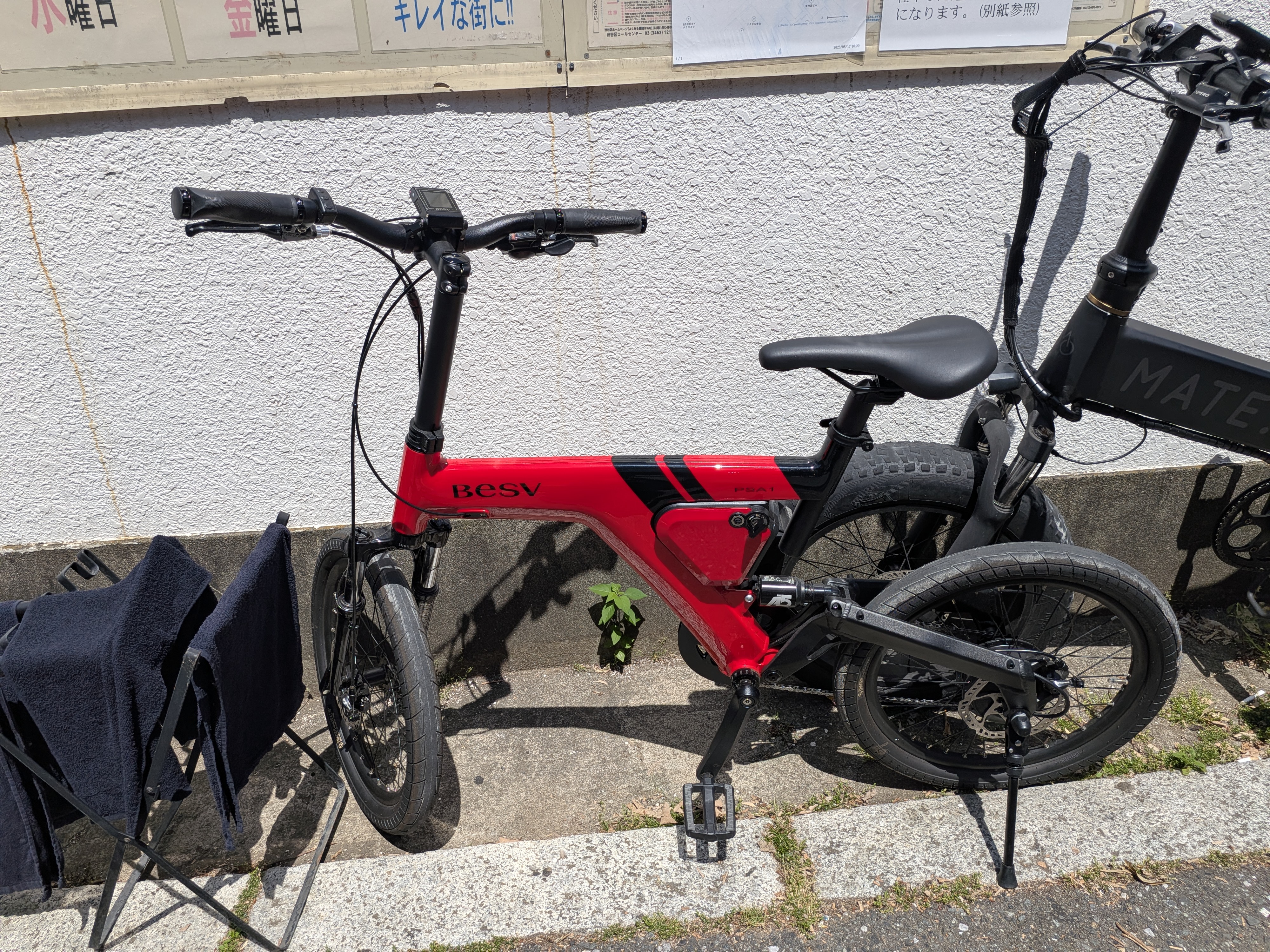
FAQ: Brake concerns on a PSA1
Is every squeak proof that the pads are worn out?
No. The handbook discusses several possible causes of poor braking or noise. A sound alone does not establish which part needs replacement, especially if performance has changed.
Should I keep riding to see if contamination clears?
No. Contamination or ineffective stopping is a reason to stop and seek proper service. Do not use a normal road trip as a test of questionable braking.
What should be checked after cleaning?
The PSA1 cleaning guide explains the drying and brake-check boundaries in the manual. A freshly washed bicycle still needs a check before riding.
Explore the BESV topic for other model information, without carrying one braking system’s procedures over to another.