


B'Twin R500E Load Limit: Separate Total Weight from Each Carrier
The B'Twin R500E load limit is not a single allowance that can be assigned anywhere on the bicycle. The inspected B’Twin Cargo Bike R500E manual lists a maximum total of 208 kg, a bicycle weight of 38 kg, a 10 kg maximum front load and an 80 kg maximum rear load. These figures answer different questions and must be read together.
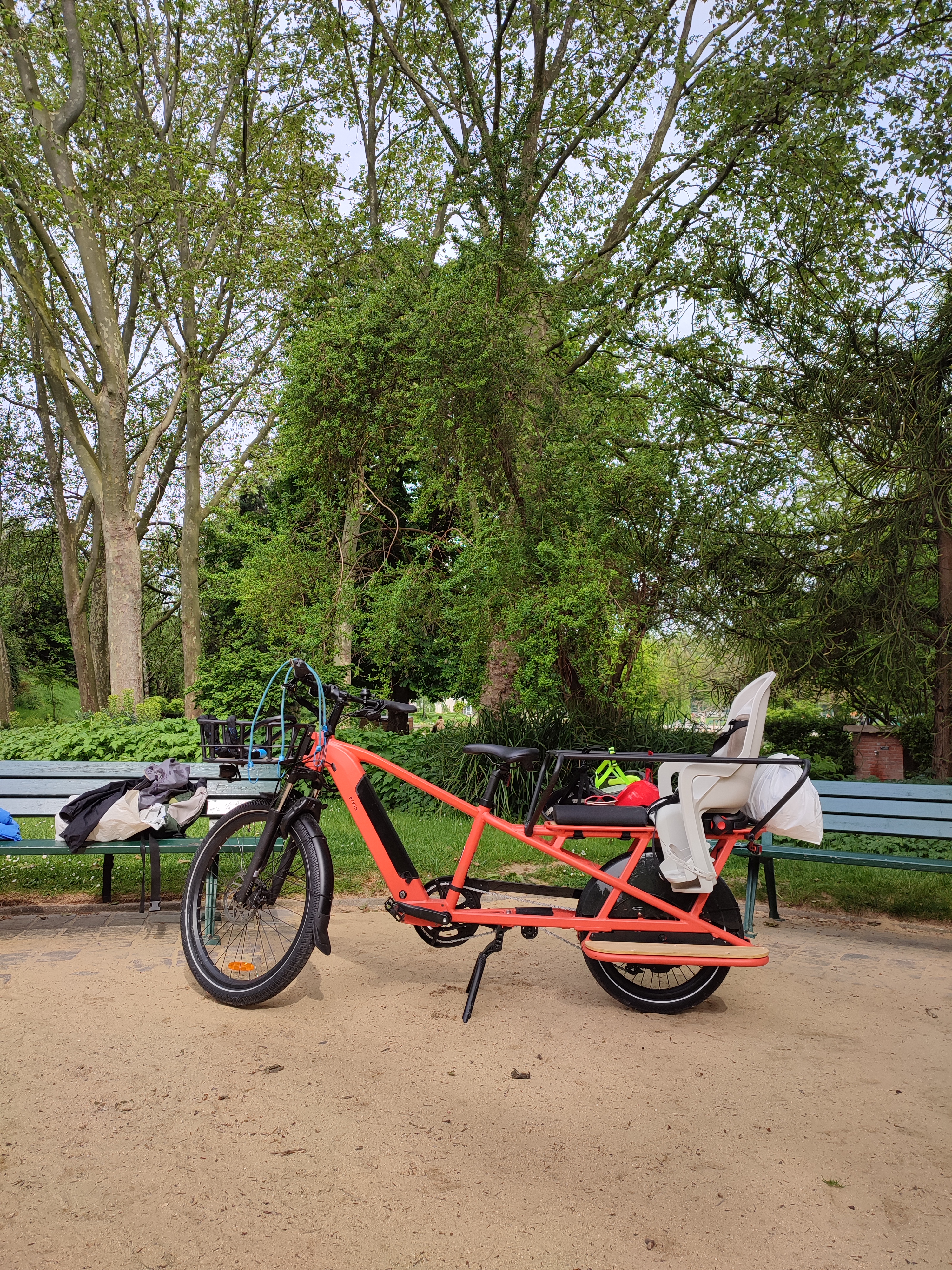
B'Twin R500E load limit: account for the complete total
Subtracting the stated 38 kg bicycle from 208 kg leaves 170 kg for the combined load carried by that documented bicycle. That is arithmetic from the manual, not 170 kg of shopping in addition to an unrestricted rider. The rider, passengers, luggage and additional equipment all need to be accounted for within the applicable complete arrangement.
Start a planning sheet with the actual bicycle and its equipment. Write down what is already attached and what will be added for this journey. If the bicycle differs from the documented version, obtain its own limits before using this calculation. A familiar R500E name is not sufficient to approve every later build.
Keep one line for each constraint
| Manual entry | Limit or stated weight |
|---|---|
| Complete total | 208 kg |
| Bicycle itself | 38 kg |
| Front load | 10 kg |
| Rear load | 80 kg |
The first two rows explain the 170 kg carried-load calculation. The last two restrict where part of that load can be placed. They are simultaneous checks, rather than four independent allowances to add together.
Keep the front and rear constraints separate
The 10 kg front and 80 kg rear entries are location-specific ceilings. Meeting the overall total does not allow either location to exceed its own limit. Equally, unused space or unused allowance at one end cannot be assumed to increase the other end’s rating.
Include the proposed carrier accessories in the discussion with Decathlon. A seat, bag or attachment can have its own restrictions. The manual’s weight table does not approve every child seat or explain how an unfamiliar accessory must be attached. The photograph records an owner-equipped historical example and supplies no such approval.
Test the proposed journey on paper first
Give the dealer a list of the rider, intended passengers, luggage and exact attachments. Ask which documented arrangement applies and where each item belongs. This is more useful than asking whether the bicycle can carry a certain weight without explaining its distribution.
Preserve the confirmed arrangement with the bicycle’s records. Revisit it when a passenger grows, equipment changes or the usual journey gains extra luggage. A calculation establishes whether the numbers are within stated constraints; it does not demonstrate handling, braking condition or a person’s ability to control the loaded bicycle.
FAQ
Is 208 kg the luggage allowance?
No. It is the documented total including the bicycle, rider and equipment.
Can an unused front allowance increase the rear limit?
No. The separate front and rear constraints still apply.
Does the photograph approve the fitted child seat?
No. Its visible owner accessories are not a compatibility assessment.
Keep the B'Twin R500E load limit with its exact manual and equipment list. The B’Twin reference topic connects the ownership material, while the existing brand introduction explains the range’s changing scope.
Primary references: Decathlon primary reference 1 (https://contents.mediadecathlon.com/s995855/k%24ed60549c49270fff7a7f8b1e4b8ee9ca/r%20500%20e%20velocargo.pdf).
Photograph credits and permissions
Photograph 1
Original title: Longtail bike - Decathlon R500E 02.jpg
Creator: Remi Mathis; creator URI: https://commons.wikimedia.org/wiki/User:Remi_Mathis
Original source URI: https://commons.wikimedia.org/wiki/File:Longtail_bike_-_Decathlon_R500E_02.jpg
License / permission: CC BY-SA 4.0 International
License / permission URI: https://creativecommons.org/licenses/by-sa/4.0/
Modification notice: Original JPEG bytes and metadata unchanged.