


B'Twin R500E Front Platform Torque: Keep the 6–9 Nm Entry with Its Joint
B'Twin R500E front platform torque appears as a named component entry in the inspected manual’s tightening appendix. The table gives the front platform 6–9 Nm. That is a joint-specific reference for the documented bicycle, not a universal setting for every fastener near its front basket.
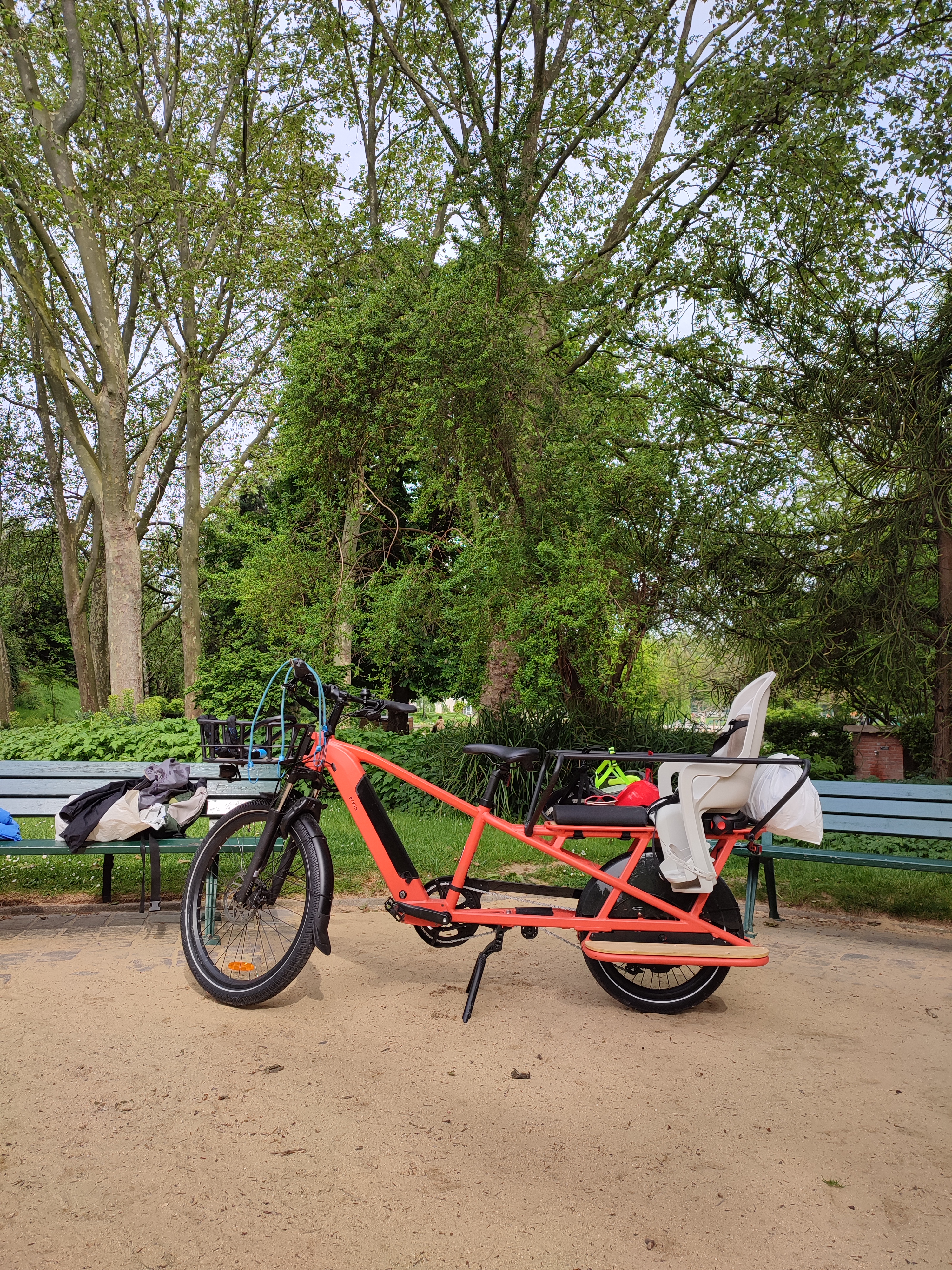
B'Twin R500E front platform torque: keep the table heading
Copy the component label and the unit with the range. A note saying only “front: six to nine” loses the identity that makes the number useful. The same appendix contains other front-end entries, and the front wheel has its own separate 30–40 Nm row.
The table also lists the front light at 6–9 Nm. Two rows having the same range does not make their fasteners, mounting arrangements or service tasks interchangeable. Identify which joint is actually being discussed before asking a workshop to apply the instruction.
Compare the named front-end rows
| Appendix label | Published torque |
|---|---|
| Front platform | 6–9 Nm |
| Front wheel | 30–40 Nm |
| Front disc | 5–7 Nm |
The disc row concerns another identified component. Its presence reinforces why the exact label belongs beside every saved value; the three ranges cannot be selected according to which tool is convenient.
Do not confuse tightening with carrying capacity
The manual’s separate precautions page gives a maximum front load of 10 kg. Kilograms of carried load and newton-metres of tightening torque describe different things. A correctly tightened assembly does not acquire an increased carrying allowance, and a light bag does not establish that a loose or damaged mounting is acceptable.
Describe both the proposed load and the actual attachment when seeking advice. If a different basket, platform or mounting kit is fitted, have its applicable requirements checked. A bicycle’s family name cannot establish that an aftermarket joint inherits the original appendix’s range.
Use the number within the applicable service instructions
The table alone does not establish fastener condition, assembly sequence, lubricant, thread-locking product or the suitability of substituted hardware. Those details need the actual component and its instructions. This article does not add missing installation steps or advise tightening damaged hardware until it feels secure.
For an enquiry after an impact, rattle or suspected movement, provide photographs of the mounting area and explain what changed. Ask the workshop to assess the surrounding assembly as well as the visible fastener. Matching a number is not a diagnosis of the platform’s condition.
Retain the exact manual edition and the approved parts after service. The historical cargo-bike photograph illustrates the overall arrangement; it is not a close-up inspection of the platform joint or proof of its tightening.
FAQ
What is the inspected front-platform entry?
The appendix lists 6–9 Nm for that named component.
Is that the front wheel’s entry too?
No. The table lists the front wheel separately at 30–40 Nm.
Does the torque range increase the front load limit?
No. Tightening and load constraints are different specifications.
Keep B'Twin R500E front platform torque tied to its exact joint. Use the B’Twin introduction for context and the reference topic for other equipment questions.
Primary references: Decathlon primary reference 1 (https://contents.mediadecathlon.com/s995855/k%24ed60549c49270fff7a7f8b1e4b8ee9ca/r%20500%20e%20velocargo.pdf).
Photograph credits and permissions
Photograph 1
Original title: Longtail bike - Decathlon R500E 02.jpg
Creator: Remi Mathis; creator URI: https://commons.wikimedia.org/wiki/User:Remi_Mathis
Original source URI: https://commons.wikimedia.org/wiki/File:Longtail_bike_-_Decathlon_R500E_02.jpg
License / permission: CC BY-SA 4.0 International
License / permission URI: https://creativecommons.org/licenses/by-sa/4.0/
Modification notice: Original JPEG bytes and metadata unchanged.