


B'Twin R500E Battery Hibernation: Distinguish Storage Mode from Switching Off
B'Twin R500E battery hibernation is a dedicated long-storage function in the inspected Cargo Bike R500E manual. It is not simply another name for turning the handlebar display off. The battery section describes holding its button for ten seconds until the battery LEDs go out, and using the matching charger to awaken it.
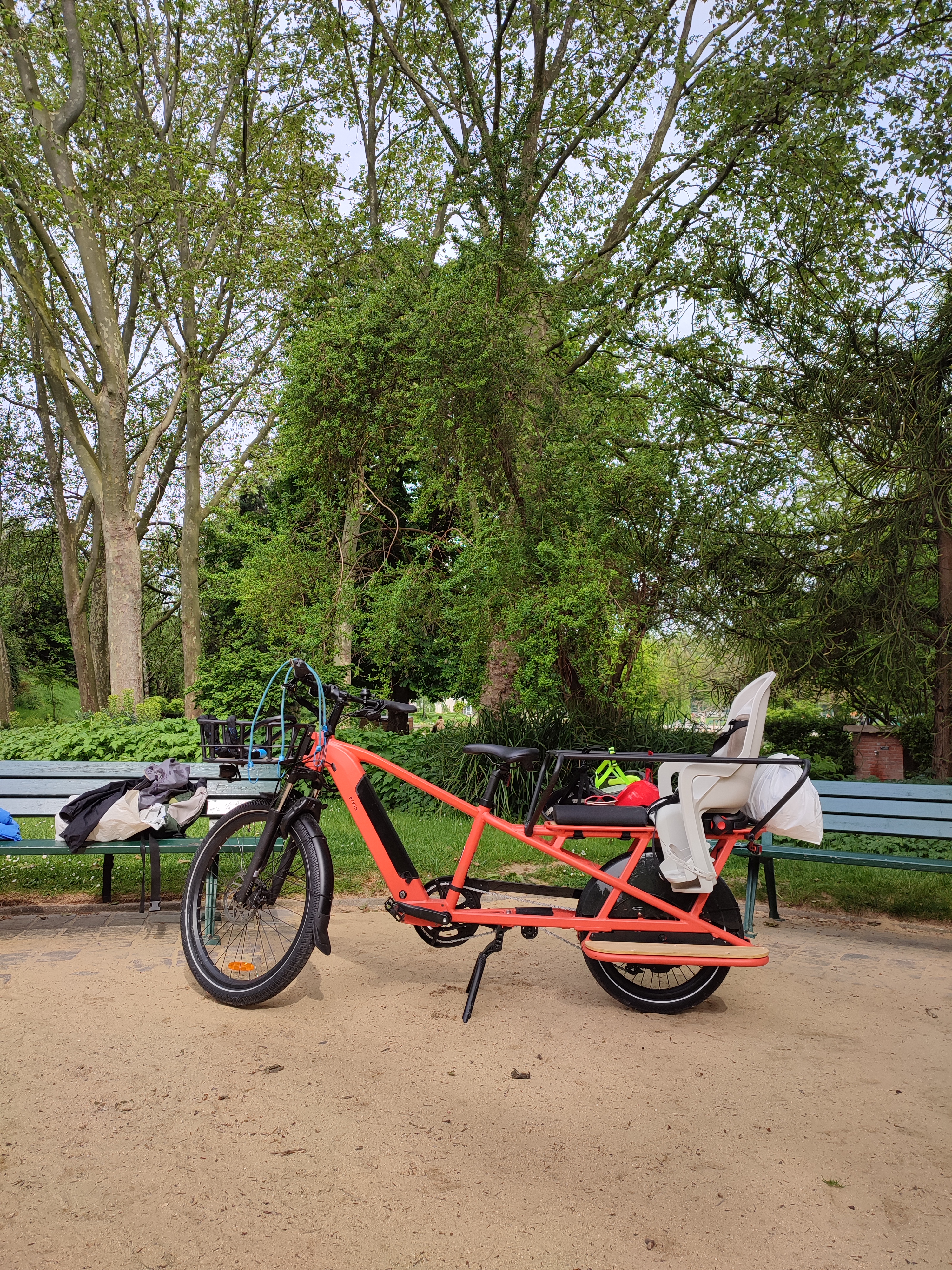
B'Twin R500E battery hibernation: identify the actual battery
Find the bicycle’s model record and the battery’s identification before following a storage procedure. A previous owner may have replaced the pack, and a later bicycle can have different instructions. A shared cargo-bike name does not establish that every battery uses the same button sequence.
Keep the applicable manual with the storage record. State which battery was checked and what indicator change was observed. That makes it easier to distinguish a correctly selected storage mode from a battery that is unexpectedly unresponsive when the bicycle is needed again.
Separate ordinary charging care from extended storage
The manual warns against storing a discharged battery and describes full charging at least every three months in its routine care section. It separately provides extended standby for a prolonged unused period. These are different conditions; a bicycle left with its screen off has not thereby been placed into the specified battery mode.
The hibernation section describes a maximum storage period of one year for that function. Keep this as the manufacturer’s stated scope for the identified battery, rather than a promise about any pack’s condition after a year. Damage, an uncertain replacement history or inconsistent indicator behaviour needs assessment instead of reliance on the calendar alone.
Keep a new-battery handover distinct from storage
The battery chapter recommends charging to 100% before first use and recharging after use. It also says the supplied battery is initially inactive and is activated by connecting its charger. Those handover instructions do not establish that every unresponsive used battery is merely inactive, or that an ordinary recharge proves hibernation had previously been selected.
Plan the return to use as well
Record the storage date and keep the correct charging equipment identifiable. The manual names connection to the battery’s charger at a power socket as the wake-up method. This article does not approve a substitute charger or an improvised method of waking an unknown battery.
If the expected response is absent, give Decathlon the battery identity, storage history and observed indicators. Do not dismantle a sealed electrical component in an attempt to restart it. Establish the cause before planning a loaded trip that depends on assistance.
The original historical photograph cannot demonstrate whether this function is selected. Storage status needs the actual battery and its instructions, with its condition considered separately.
FAQ
Does turning the display off prove hibernation?
No. The manual describes a separate action at the battery.
What wakes the documented battery?
The manual specifies charging it with its charger at a power socket.
Can these instructions be assumed for a replacement pack?
No. Identify that pack and its applicable instructions first.
Keep B'Twin R500E battery hibernation in the bicycle’s storage record. Wider family context is in the B’Twin introduction; the B’Twin reference collection provides other ownership topics.
Primary references: Decathlon primary reference 1 (https://contents.mediadecathlon.com/s995855/k%24ed60549c49270fff7a7f8b1e4b8ee9ca/r%20500%20e%20velocargo.pdf).
Photograph credits and permissions
Photograph 1
Original title: Longtail bike - Decathlon R500E 02.jpg
Creator: Remi Mathis; creator URI: https://commons.wikimedia.org/wiki/User:Remi_Mathis
Original source URI: https://commons.wikimedia.org/wiki/File:Longtail_bike_-_Decathlon_R500E_02.jpg
License / permission: CC BY-SA 4.0 International
License / permission URI: https://creativecommons.org/licenses/by-sa/4.0/
Modification notice: Original JPEG bytes and metadata unchanged.